
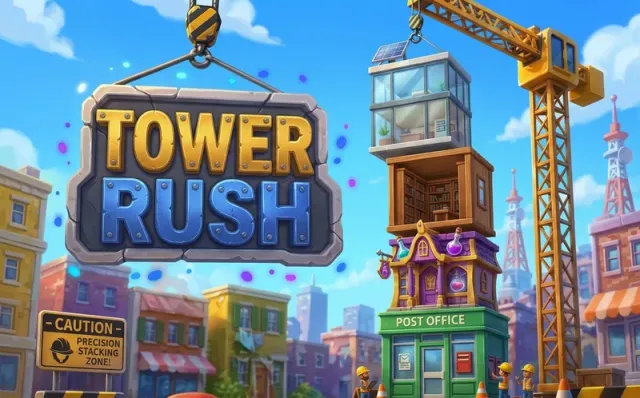
Crash game · Galaxsys

How to Win at Tower Rush – Strategy and Tips

This guide shows how to manage your bankroll, choose cash-out targets and avoid the mistakes that cost Tower Rush players the most.

Tower Rush
RTP 96.2–97.6%
Medium-high volatility
Bets C$0.10–C$100
Tower Rush - main content

Understanding the Tower Rush Mechanics

Every Tower Rush strategy starts with one honest fact: the outcome of each round is random, and no betting pattern changes it. Whether a floor lands or the tower collapses does not depend on how long you waited, how much you staked or what happened in the last round.

What decides a round is simple. Each floor that lands brings its own odds, and those odds multiply into your running multiplier; one bad floor ends the round with the stake lost. Bonus floors can tilt a single round: a Frozen Floor protects a minimum multiplier, a Temple Floor spins a wheel from x1.5 to x7, and Triple Build adds three safe floors.

What you control is narrower, but it matters:

  • how much you stake per round, from C$0.10 to C$100;
  • after which floor you press Cashout;
  • how many rounds you play and when you stop.

A Tower Rush strategy is a plan for those three things. You can try any plan for free in the Tower Rush demo before you use it with real money.

Bankroll Management – the Core of a Tower Rush Strategy

Bankroll management is the part of a Tower Rush strategy that really works, because it controls how long your money lasts, not whether a tower stands.

The 1–5% Rule

Stake 1–5% of your session budget per round. With a C$100 budget that means C$1 to C$5 per round; the table shows the same rule for other budgets:

Session budget1% stake3% stake5% stake
C$20C$0.20C$0.60C$1
C$50C$0.50C$1.50C$2.50
C$100C$1C$3C$5
C$500C$5C$15C$25

At 1%, a run of 20 lost rounds costs a fifth of the budget. At 5%, the same run ends the session. Because Tower Rush has medium-high volatility, losing streaks are part of normal play, so the lower end of the range gives you more rounds to work with.

Session Limits

Set two limits before you start: a loss limit – usually the whole session budget – and a time limit, for example 30 minutes. Tower Rush rounds are short, so a session can run to hundreds of rounds before you notice. A timer on your phone does more for your bankroll than any cash-out trick.

When to Stop

Stop when the session budget is spent, when the time limit is up or when you notice you are playing to win money back. Many players also set a win goal – say 50% above the starting budget – and end the session once they reach it. Stopping is a decision you make before the session, not during it.

Tower Rush Betting Approaches

Three approaches cover most ways to play Tower Rush. Each one fixes a stake size and a cash-out target in advance, and none of them raises the stake after a loss.

Conservative

Stake 1–2% of the budget and cash out at a low multiplier, around x1.5 to x2. You win small amounts more often and the budget lasts longest. This suits long sessions and players still learning Tower Rush.

Balanced

Stake 2–3% of the budget and aim for x2 to x5. Wins come less often but pay more, and a Temple Floor or Triple Build can carry a round to the target faster. Players who want a mix of pace and payout usually end up here.

Aggressive

Stake no more than 1% of the budget and aim for x10 or higher. The tower has to survive many floors, so most rounds will lose. The low stake is what keeps this approach from turning reckless: you buy many small attempts at a big multiplier instead of a few large ones.

Cash-Out Strategy and Timing in Tower Rush

The cash-out target is the main decision in every round. The table shows what each target pays on a sample C$2 stake and how much risk it carries:

Cash-out targetPayout on a C$2 stakeRisk level
x1.5C$3Low
x2C$4Low
x3C$6Medium
x5C$10Medium
x10C$20High
x25C$50High
x50 and aboveC$100 and moreExtreme

The higher the target, the more floors the tower must survive, and every extra floor is another chance for the round to end with nothing. A Frozen Floor changes the maths for one round: once it has locked a multiplier, a collapse later still pays at least that much, so building on costs less in that round.

Pattern Myths

Statistics shows recent towers and top multipliers, and it is tempting to read a pattern in them – three short towers in a row, so a tall one must be due. It is not. Each round is decided on its own, and past towers do not predict the next one. Use Statistics to understand the game, not to time your bets.

Common Tower Rush Mistakes

Chasing Losses

Raising the stake to win back what you just lost is the fastest way to empty a budget, and the X2 button makes it a one-tap mistake. A lost round is gone; the next round does not owe you anything.

No Stop-Loss

Without a loss limit, a session ends only when the balance does. Decide the amount you are ready to lose before the first round and stop when it is spent.

Staking Too Much

All In sets the highest stake your balance or the limit allows. In a medium-high volatility game, one collapsed tower at that stake can end the session in a single round.

Ignoring Volatility

Medium-high volatility means long runs of short towers are normal. A stake that feels fine after three wins can look very different after fifteen losses.

Playing Emotional

Frustration after a tower falls one floor short, or excitement after a big cash-out, both push you to break your plan. If you notice either, take a break.

Believing in Systems

Martingale, hot streaks and paid prediction tools all promise to beat a random game. None of them can: the RTP of 96.2% to 97.6% stays the same whatever system you use.

The Psychology of Playing Tower Rush

Tower Rush is fast and visual, and that is exactly what makes the mental side important. A tower that keeps growing pulls you to build one more floor.

Discipline

Discipline means doing what you planned while the round is live. Write down your stake, cash-out target and loss limit before the session, and treat them as fixed. If you want to change them, do it during a break, never in the middle of a round.

Avoiding Tilt

Tilt is playing on emotion after a bad run: bigger stakes, higher targets, faster clicks. The signs are easy to spot – you stop checking the balance, you press X2 without thinking, you feel you must win the last loss back. When that happens, close the game. A ten-minute break costs nothing.

Advanced Tower Rush Tips

Treat Your Target as Auto Cash-Out

In Tower Rush you press Cashout yourself after a floor lands. Treat the target you set before the round as your own auto cash-out: when the multiplier reaches it, cash out without a second thought.

Keep a Session Log

Note the budget, stake, target, number of rounds and result of each session. History shows your past rounds, so filling in the log takes a minute. After a few sessions you will see whether your plan fits your budget.

Practise in the Demo

Any change to your plan – a new target, a different stake – goes through the demo first. It costs nothing to find out that a target is too ambitious.

Verify Fairness

The RNG Fairness Check lets you copy a round's hash and verify the result yourself. Knowing how the check works is the best answer to rigging rumours, and the page is Tower Rush legit explains it step by step.

FAQ

Tower Rush Strategy FAQ

Is there a strategy that always wins at Tower Rush?

No. Every Tower Rush round is random, and no betting pattern changes the outcome. A strategy controls your stake, your cash-out target and when you stop – that decides how long your budget lasts, not whether you win.

What is the best cash-out target in Tower Rush?

There is no best target, only a trade-off. Low targets such as x1.5 to x2 pay more often but less; high targets such as x10 pay more but fail more often. Pick one that fits your budget and keep it for the whole session.

How much should I stake per round in Tower Rush?

A common rule is 1–5% of your session budget. With C$100, that means C$1 to C$5 per round, which leaves room for the losing streaks of a medium-high volatility game.

Does doubling the stake after a loss work in Tower Rush?

No. Raising the stake after losses only makes the next loss bigger. The game has no memory of earlier rounds, so a loss does not make the next win more likely.

Do bonus floors change a Tower Rush strategy?

They change single rounds, not the plan. A Frozen Floor secures a minimum multiplier and Triple Build adds three safe floors, but they appear at random, so your stake and target should not depend on them.

Can I practise a Tower Rush strategy for free?

Yes. The demo uses virtual credits with the same rules and RTP, so you can test stakes and cash-out targets over hundreds of rounds without risking money.

Last updated 2026-10-27